

Whether you’re renting out a property or moving into one, a rental agreement is one of the most important documents you’ll need. It’s not just paperwork—it’s a legal document that protects both the landlord and the tenant. A rental agreement helps prevent misunderstandings, sets clear rules, and makes sure everyone knows their responsibilities.
In this blog, we’ll guide you through everything you need to know about rental agreements in India: the necessary documents, how to draft one, and common mistakes to avoid. Let’s get started!
What Is a Rental Agreement?
A rental agreement is a contract between a landlord and a tenant. It explains the rules for living in a rented property. It includes details such as:
- Duration of the rental
- Rent amount
- Security deposit
- Maintenance responsibilities
- Termination clauses
The agreement helps make sure that both sides understand their rights and duties. It’s a simple way to avoid problems by making everything clear from the beginning. Whether you’re renting for a few months or a year, having a rental agreement keeps things fair and organized.
Documents Required for a Rental Agreement
The landlord and tenant must furnish specific documents to create a valid and legally binding rent agreement. Here’s a list of essential documents required:
For Landlord:
- Proof of property ownership (like a sale deed or tax receipt)
- ID proof (Aadhaar card, PAN card, Passport, etc.)
- Passport-size photograph
For Tenant:
- ID proof (Aadhaar card, PAN card, Passport, Driving License)
- Employment/Income proof (optional but recommended)
- Passport-size photograph
Additional Documents (if applicable):
- Power of Attorney (if someone is signing on behalf of the owner)
- NOC from society or apartment association (in some cities)
Having these documents ready speeds up the process and adds credibility to the agreement.
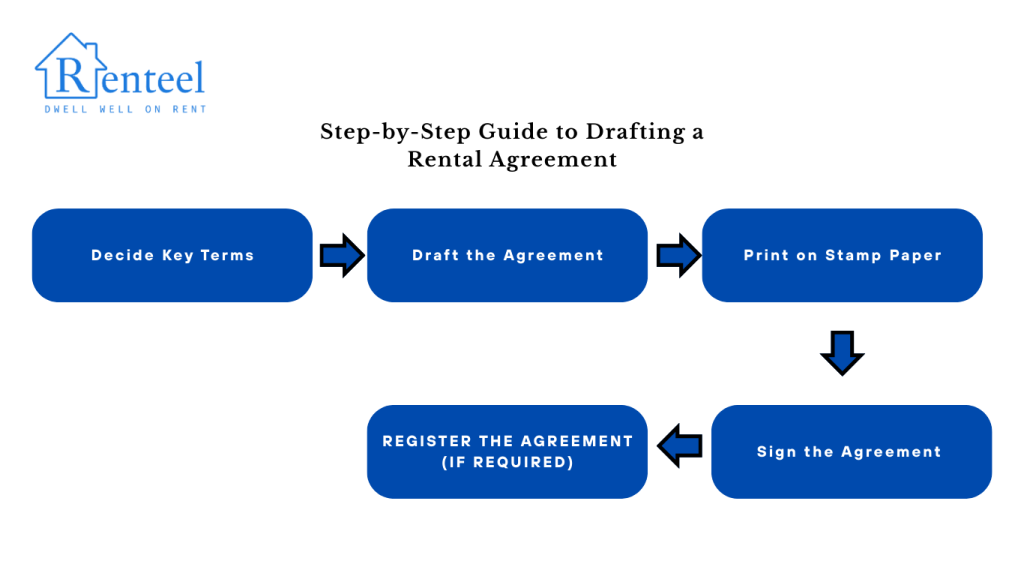
Step-by-Step Guide to Drafting a Rental Agreement
Creating a rent agreement doesn’t have to be complicated. Here’s a simplified step-by-step process:
Step 1: Decide Key Terms
Before drafting, the landlord and tenant should agree on key terms like rent amount, duration, security deposit, notice period, and maintenance responsibilities.
Step 2: Draft the Agreement
You can hire a legal expert or use verified templates to draft the rent agreement. Make sure it includes:
- Names and addresses of both parties
- Property description
- Duration of lease
- Monthly rent and due date
- Security deposit
- Responsibilities (repairs, utilities, maintenance)
- Termination clauses and notice period
- Restrictions (pets, subletting, etc.)
Step 3: Print on Stamp Paper
As per state-specific laws, print the agreement on a stamp paper of appropriate value (generally ₹100 to ₹500). Each state in India may have its own stamp duty rules.
Step 4: Sign the Agreement
Both parties must sign the agreement along with two witnesses.
Step 5: Register the Agreement (if required)
If the agreement is for more than 11 months, it’s mandatory to register it at the local sub-registrar’s office.
Before signing a rental agreement, it’s also a good idea to conduct a tenant screening to make sure you’re choosing the right renter.
Common Mistakes to Avoid When Creating a Rental Agreement
Here are some common pitfalls to watch out for:
1. Not Registering Long-Term Agreements
Unregistered agreements beyond 11 months are not legally valid and may not hold up in court.
2. Ambiguous Terms
Vague or unclear terms can lead to misunderstandings. Be specific about every clause, especially around rent increases, maintenance, and notice periods.
3. Skipping the Stamp Duty
Avoiding stamp duty to save money can invalidate the agreement legally.
4. Not Conducting Background Checks
Landlords should always verify the tenant’s ID and employment details. Similarly, tenants should confirm the landlord’s ownership.
5. Ignoring Local Laws
Each state may have different rent control regulations; failing to comply can result in legal issues.
Conclusion
A rental agreement is a key part of any rental process. It protects both landlords and tenants by clearly stating the terms, rules, and responsibilities. Whether you’re renting a home or offering one for lease, having a proper rental agreement helps avoid problems and keeps things running smoothly. Always read the agreement carefully before signing, and make sure everything is clear and fair. A strong rental agreement is the first step to a stress-free renting experience.
If you’re looking for support with your rental property, using professional real estate services can save you time and stress. For hassle-free rental management, feel free to contact Renteel. We’re here to make the process smooth and simple for you.

