
Renting a home or apartment can be a smart and flexible option, but whether you’re relocating for work, moving into your first apartment, or downsizing, knowing what to look out for is crucial. In this guide on 5 Red Flags to Watch for When Renting a Property, we’ll help you spot common issues that many renters miss until it’s too late.
From vague lease terms to suspiciously low rent, recognizing these red flags early can save you time, money, and stress. Whether you’re a first-time renter or moving to a new city, understanding what to avoid is just as important as knowing what to look for.
Red Flag #1: No Written Lease Agreement
The absence of a written lease or rental agreement should immediately raise concern. A lease is a legal contract that outlines your rights and responsibilities as a tenant and protects both you and the landlord. Without it, you’re left vulnerable to unexpected rent increases, security deposit disputes, early eviction, or withheld repairs.
Why It Matters
A verbal agreement or vague, generic document leaves room for miscommunication and exploitation. Without a written lease, you may have no legal standing if issues arise.
What to Watch For
1. The landlord refuses to provide you with a copy of the lease.
2. The lease lacks clarity regarding the rent amount, deposit terms, maintenance responsibilities, and notice period.
3. The landlord pressures you to sign without reading it.
Tip: Always read the lease carefully and never rent a property without a proper, signed agreement. If anything seems unclear, ask for clarification in writing.
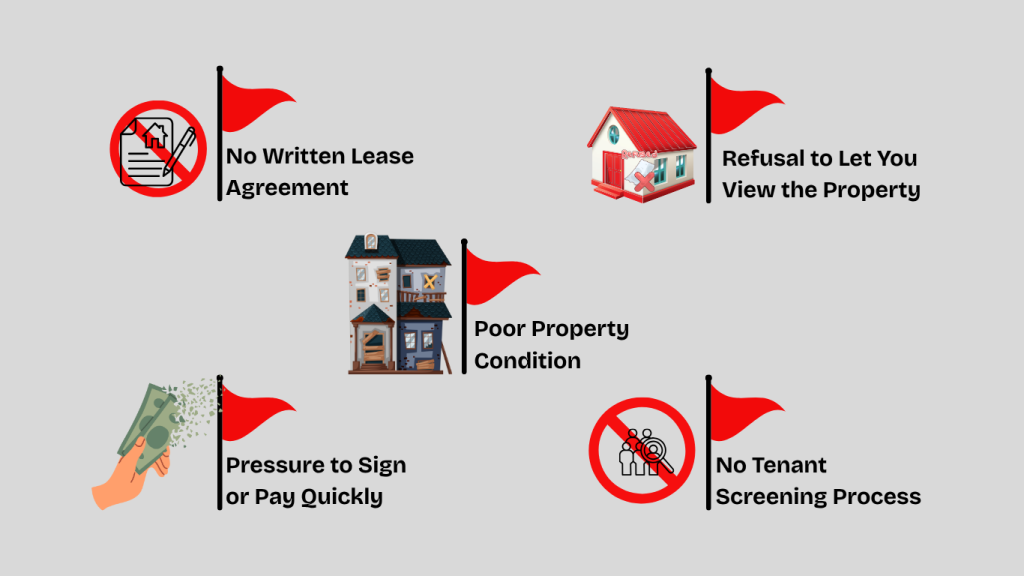
Red Flag #2: Refusal to Let You View the Property
Another major concern is the refusal to let you view the property in person. Scammers or negligent landlords often avoid showing the property because it may not exist, or it might be in poor condition.
You should never agree to rent a place sight unseen unless there are legitimate reasons, and even then, virtual tours or a trusted representative should be available.
Why It’s a Red Flag
Fraudsters may collect deposits for properties they don’t own—or that don’t exist. Even if the listing is real, refusing a viewing could mean they’re hiding poor conditions or illegal activity.
Watch Out For:
1. Excuses like “I’m out of town” or “Someone is already living there.”
2. Requests for deposit or rent before any walkthrough.
3. Avoidance of phone or video calls.
Tip: Never send money without seeing the property. Legitimate landlords or agents will arrange a visit or provide a virtual tour at the very least.
Red Flag #3: Poor Property Condition
If a property appears neglected or in disrepair, it’s a clear sign of a bad landlord. From broken fixtures to moldy walls, the physical state of a rental reflects how seriously the owner takes their responsibilities.
Why It’s Important
A poorly maintained property not only affects your quality of life but could pose health and safety risks. Additionally, it hints at how the landlord may handle (or ignore) future maintenance requests.
What to Look For
1. Water stains, leaks, mold, and pest issues.
2. Electrical problems, broken locks, or fixtures.
3. Fresh paint or scents covering up underlying damage.
Tip: Do a full walkthrough, test everything (lights, taps, doors, appliances), and take photos of existing damages. Ask for a written record of what repairs will be done before move-in.
Red Flag #4: No Tenant Screening Process
A landlord who doesn’t ask for basic tenant information like proof of income, references, or rental history might seem like a dream. But it’s often another rental scam to avoid.
Why It’s Suspicious
Good landlords want responsible tenants. If they don’t care about your background, it might mean:
1. They’re rushing to rent out a problem property.
2. They’re not running a legitimate operation.
3. They may be renting illegally.
Warning Signs:
▪️ No application form, ID verification, or income check.
▪️ Immediate offer to rent after a casual conversation.
▪️ Lack of professionalism in communication or documentation.
Tip: Responsible landlords screen tenants for a reason. A lack of screening can indicate deeper problems you may encounter down the line.
Red Flag #5: Pressure to Sign or Pay Quickly
If the landlord or agent urges you to commit immediately without time to read the lease, inspect the home, or ask questions, it’s a major red flag.
Why It’s a Common Scam Tactic
Scammers and shady landlords rely on urgency. They don’t want you to do due diligence. You may hear phrases like:
1. There’s another renter ready to sign.
2. Pay today or lose the deal.
3. You don’t need to worry about the contract now, just send the deposit.
What to Do Instead
Take your time to review all documents, verify ownership (especially for private rentals), and ask for official receipts for any money you transfer.
Tip: A legitimate rental process allows you time and transparency. Never let pressure override your instinct or common sense.
Bonus Tip: Do a Background Check
Beyond these red flags, always investigate the landlord and the property itself. A quick online search can reveal signs of a bad landlord or fraudulent listings.
How to Check:
▪️ Look up landlord or property reviews.
▪️ Use rental platforms with verified listings.
▪️ Ask neighbors about the area and past tenants’ experiences.
There are tools available to confirm property ownership and history. In India, for example, state government portals often provide land and property records online.
Conclusion: Trust Your Instincts and Stay Informed
Spotting these 5 red flags to watch for when renting a property can save you from stressful situations and potential scams. Always:
- 1. Insist on a clear lease.
- 2. Inspect the home.
- 3. Avoid urgency traps.
- 4. Ask the right questions.
Renting shouldn’t feel risky, just informed. Take the time to understand your rights and do the groundwork before signing anything.
Need help finding reliable rentals?
At Renteel, we simplify the rental process with transparent listings, verified landlords, and end-to-end support. Contact us today for hassle-free property solutions you can trust.
Frequently Asked Questions (FAQs)
1. What are the most common rental scams to avoid?
Fake listings, requests for payment without viewings, and unregistered landlords are among the top scams to watch out for.
2. Can I trust a property if the rent is far below the market rate?
Not always. Unrealistically low rent is often a red flag. Always compare with similar listings in the area.
3. How do I verify if a landlord is legitimate?
Ask for property documents, ID proof, and check reviews or online databases for ownership verification.

