
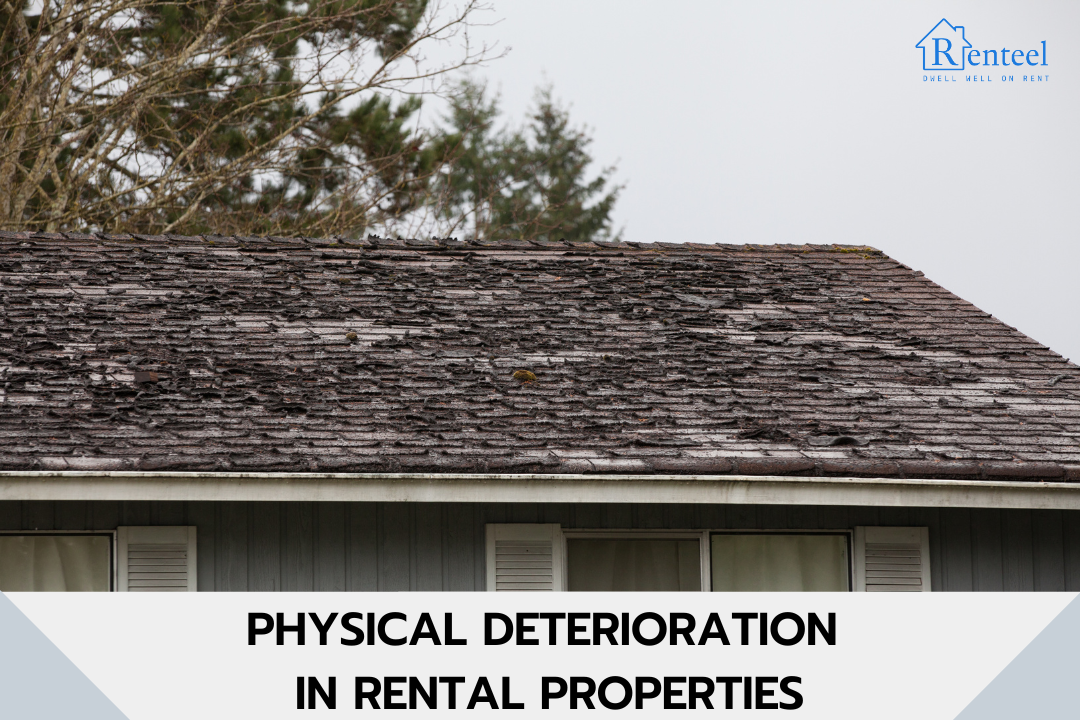
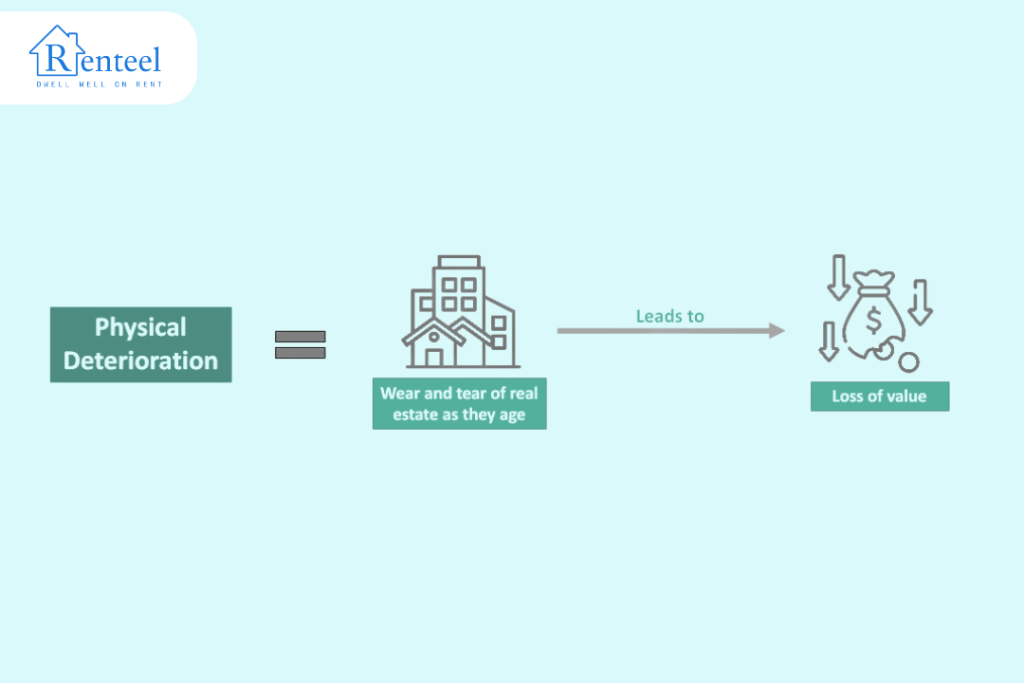
A decrease in physical condition brought on by aging, wear and tear, or other causes is referred to as physical degradation. In real estate, it refers to the slow deterioration of a property’s physical state over time as a result of wear and tear, aging, or decay.
In this blog, we’ll go over the reasons behind physical degradation in rental properties, as well as how to stop and control it, and the advantages of hiring a professional property manager to assist in keeping your property in good condition.
What is Physical Deterioration in Rental Properties?
Physical deterioration in rental properties refers to the gradual decline in the condition of a property due to aging, weather exposure, and daily use. It can be classified into two types:
- Curable Deterioration: Damage that can be repaired or restored cost-effectively, such as peeling paint, minor plumbing leaks, or cracked tiles.
- Incurable Deterioration: Structural issues or foundational problems that are expensive or impractical to fix, such as major foundation cracks or outdated building materials.
By utilizing rental property management services, landlords can stay ahead of deterioration by implementing preventive maintenance strategies and tracking property conditions seamlessly.
Causes of Physical Deterioration in Rental Properties
Physical deterioration is something that every rental property owner faces over time. But knowing the causes of deterioration can help landlords avoid costly repairs. Here are the most common reasons that cause physical deterioration in rental properties.
Aging Infrastructure
As a building gets older, things like the roof, plumbing, and electrical systems start to wear out. Pipes may leak, wiring can become unsafe, and the roof might start to sag or let in water. These issues are normal, but they can lead to bigger problems if they’re not addressed in time.
Everyday Wear and Tear
People use rental homes every day, so things naturally start to wear out. Floors get scratched, appliances stop working as well, and walls can get scuffed or chipped. This happens most in places like the kitchen, bathroom, and entryway. A little wear and tear is normal, but it’s still a good idea to check for damage often so small problems don’t turn into big ones.
Weather and Environmental Damage
Bad weather can wear down a property. Rain, snow, heat, and strong winds can damage the roof, walls, and even the foundation. Too much moisture can also cause mold or rot, especially if there are leaks or not enough airflow. Over time, these things can slowly break down the building.
Lack of Regular Maintenance
Big problems often start small. A leaky tap, a broken tile, or a blocked gutter might not seem like a big deal at first, but if you leave them too long, they can lead to water damage, mold, or even serious damage to the building. Doing regular check-ups on the property helps you spot these issues early, before they turn into costly repairs.
Pest Infestations
Pests like termites, rats, mice, and cockroaches don’t just make a home uncomfortable — they can actually cause serious damage. Rats and mice can chew on wires and insulation, termites can eat away at wood, and cockroaches can spread germs. It’s important to deal with pests quickly before they cause bigger problems.
How to Prevent and Manage Physical Deterioration
Over time, every property experiences wear and tear, whether it’s from aging materials, bad weather, or the regular use by tenants. While you can’t completely stop this from happening, there are things you can do to slow it down and take care of it better.
Do regular inspections: It’s a good idea to check your property often, both inside and out. Look for small issues like cracks, leaks, or worn-out areas that can be easily fixed before they get worse. Regular inspections help you stay on top of things, and you’ll catch potential problems early.
Keep up with maintenance: Don’t wait until something breaks or gets bad. Regular maintenance, like cleaning the gutters, changing air filters, and servicing appliances, goes a long way in keeping everything working smoothly. Even small tasks like checking for leaks or cleaning drains can prevent bigger issues.
Fix repairs quickly: If a tenant reports an issue, try to get it fixed as soon as possible. Even if it seems like a small problem, like a leaky faucet or a cracked tile, ignoring it can lead to bigger and more expensive damage down the road. By responding quickly, you show your tenants you care about their living conditions, and you’ll avoid potential safety issues that could get worse.
Use quality, long-lasting materials: When you’re doing repairs, upgrades or interior services, think long-term. Opt for durable materials that won’t need replacing as often, like high-quality flooring, weather-resistant paint, or stainless steel appliances. While these materials might cost a bit more upfront, they’ll save you money in the long run by lasting longer and requiring less maintenance.
Prepare for the seasons: Different seasons bring different challenges for your property. In the winter, make sure heating systems are working and check pipes for any signs of freezing. In summer, inspect the roof and air conditioning units. Doing this kind of seasonal prep can help you avoid emergency repairs and keep the property comfortable for your tenants year-round.
Consider hiring a property management company: If you own multiple properties or just don’t have the time to manage everything yourself, a property management company can be a real lifesaver. They handle regular inspections, maintenance requests, and repairs, taking a lot of the stress off your shoulders. Plus, they have the experience to spot issues before they become bigger problems, saving you money and hassle in the long run.
At Renteel, we provide advanced property management solutions that help landlords minimize the effects of physical deterioration in rental properties.
Conclusion
To wrap it up, physical deterioration in rental properties is something that happens over time, but taking care of your property with regular maintenance can help keep things in good shape. By staying on top of repairs, checking in regularly, and fixing problems early, landlords can save money and avoid big headaches later. Taking these steps ensures your property stays in decent condition and provides tenants with a safe and comfortable place to live. Sign up with Renteel today and make property management easier!

